Quick answer
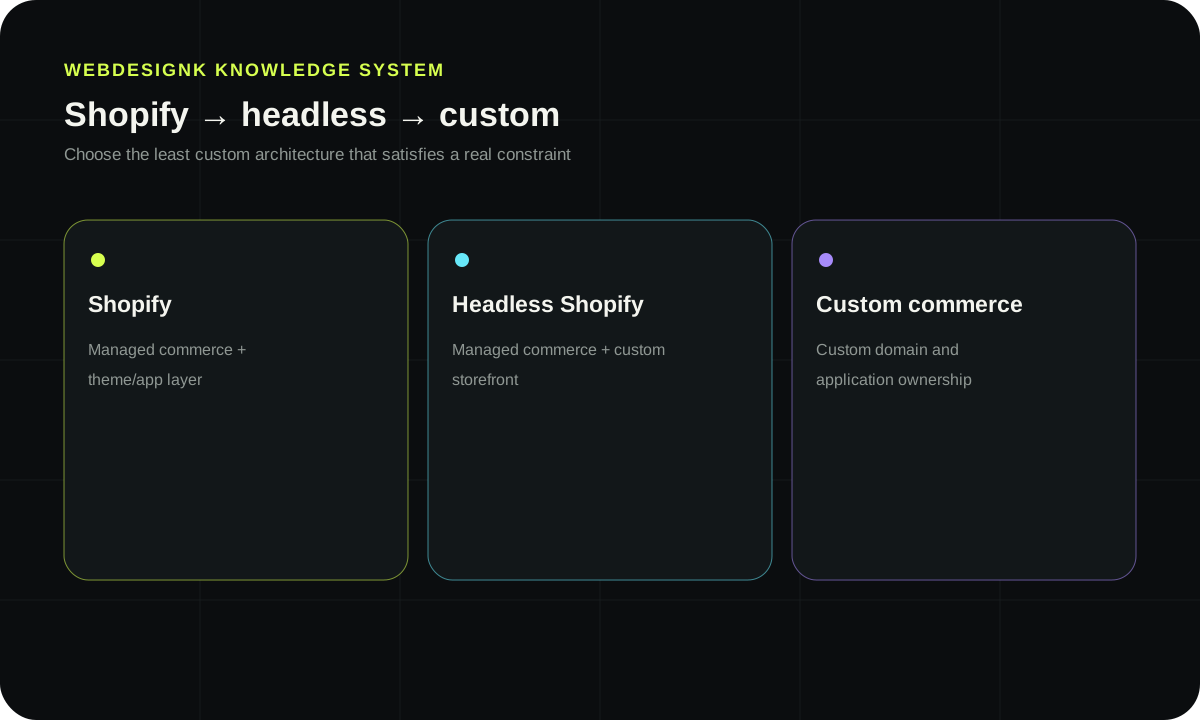
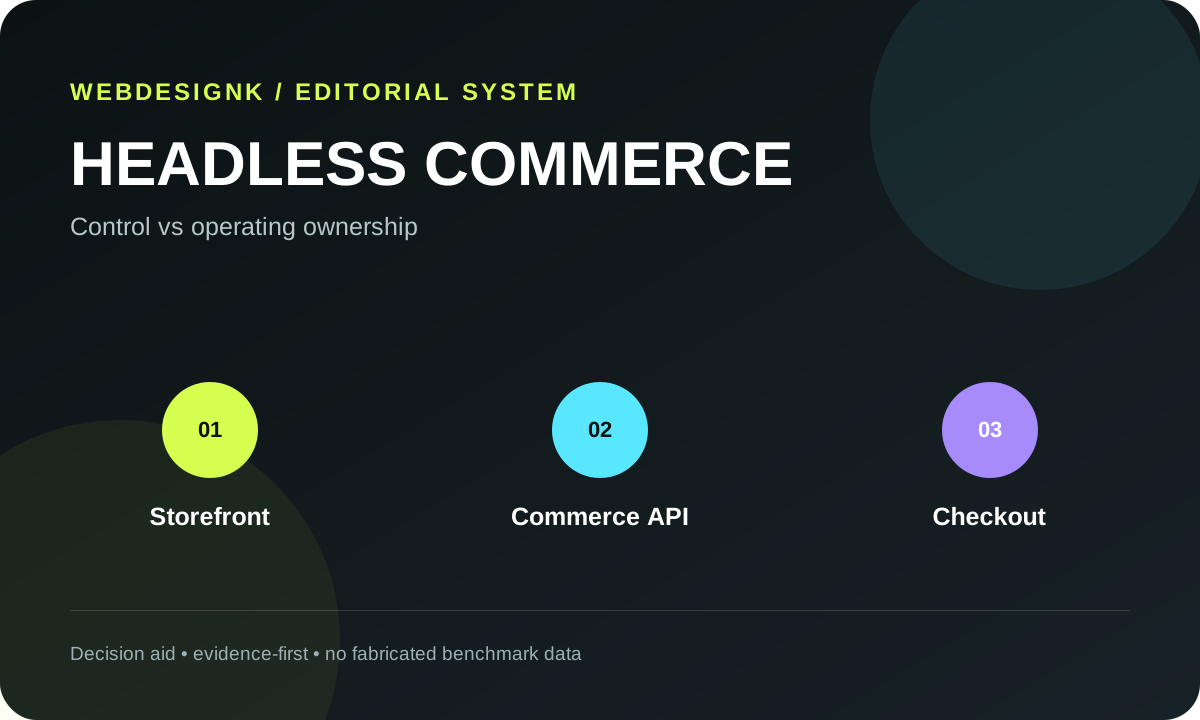
The core tradeoff is storefront control versus operating ownership. Headless is useful when the differentiated journey justifies owning more software; otherwise it can convert platform convenience into custom maintenance.
Last reviewed: September 16, 2026Commerce funnel calculator
1. Reader-data funnel bars
2. One-stage improvement scenario
Modeled revenue delta: $0 and modeled gross-margin delta: $0 from your inputs only.
3. Funnel friction heatmap
All funnel, revenue and margin calculations use only reader-entered analytics and simple arithmetic; no conversion benchmark is assumed.
Tables built for the buying decision
Primary decision table
| Journey stage | Friction | Change | Mechanism | Implementation effort | Measurement event |
|---|---|---|---|---|---|
| Discovery | Complex catalog hard to navigate | Custom guided discovery | Search/facet APIs | High | search/filter/product click |
| PDP | Configuration is difficult | Custom product builder | Catalog + pricing data | High | variant/config completion |
| Cart | Cross-system state breaks | Unified cart state | Commerce API | Medium | add/remove/cart view |
| Checkout | Context lost at handoff | Preserve locale/discount/identity | Checkout integration | Medium | checkout start/purchase |
| Post-purchase | Experience ends at receipt | Account/content integration | Customer/order APIs | Medium | repeat/activation event |
Headless readiness questions
| Area | Ready when | Warning sign |
|---|---|---|
| Engineering | Named owner for storefront/releases | Project team disappears after launch |
| Merchandising | Admin controls remain usable | Every campaign needs code |
| SEO | URL/canonical/facet rules designed | SEO added after frontend build |
| Analytics | Stable event/ID contract | Each integration invents its own IDs |
| Operations | Monitoring + incident ownership | Only frontend uptime is monitored |
Sources and assumption boundaries
Fast-changing platform, pricing and AI-search claims were reviewed on September 16, 2026. Interactive scores and scenarios are clearly labeled planning models, not sourced market benchmarks.
- Shopify — Hydrogen Official headless stack documentation; reviewed September 16, 2026.
- Shopify — Storefront API Official custom-storefront API reference; reviewed September 16, 2026.
- web.dev — Core Web Vitals Official web performance guidance; reviewed September 16, 2026.
Turn this planning result into a scoped review.
Send the assumptions, constraints and result summary. WebDesignK can review the architecture/content/implementation boundary, identify missing discovery inputs and return a prioritized next-step scope.
- Bring: current site/product, constraints, integrations and your tool result.
- You get: a scoped recommendation, open questions and implementation priorities.
Decision snapshot for headless ecommerce
Headless ecommerce makes sense when the commercial experience genuinely needs a custom storefront layer—complex discovery, multiple frontends, deep personalization, unusual content-commerce composition, or integration patterns that a standard theme cannot handle cleanly. It does not make sense merely because “headless is faster” or sounds more modern. You are trading platform-coupled convenience for additional ownership across frontend engineering, caching, APIs, SEO, analytics and release operations.
What you will decide: whether the shopper problem justifies architectural separation, where complexity actually lives in the catalog and journey, which revenue events must remain measurable, and whether your team can own the day-two operating model.
Commercial goal and shopper problem
Start from a shopper or operating constraint, not from framework preference. Common valid triggers include a discovery experience that requires data from several systems; content-rich category or editorial journeys that do not fit the platform theme model; regional storefronts with shared commerce data; a need to reuse commerce capabilities across web, app or other channels; or experimentation that demands frontend release independence.
If the current platform can solve the problem with a maintainable theme or standard extension, headless may simply move complexity into custom software. The business case should name the shopper friction and the operating benefit expected from solving it.
Platform and architecture implications
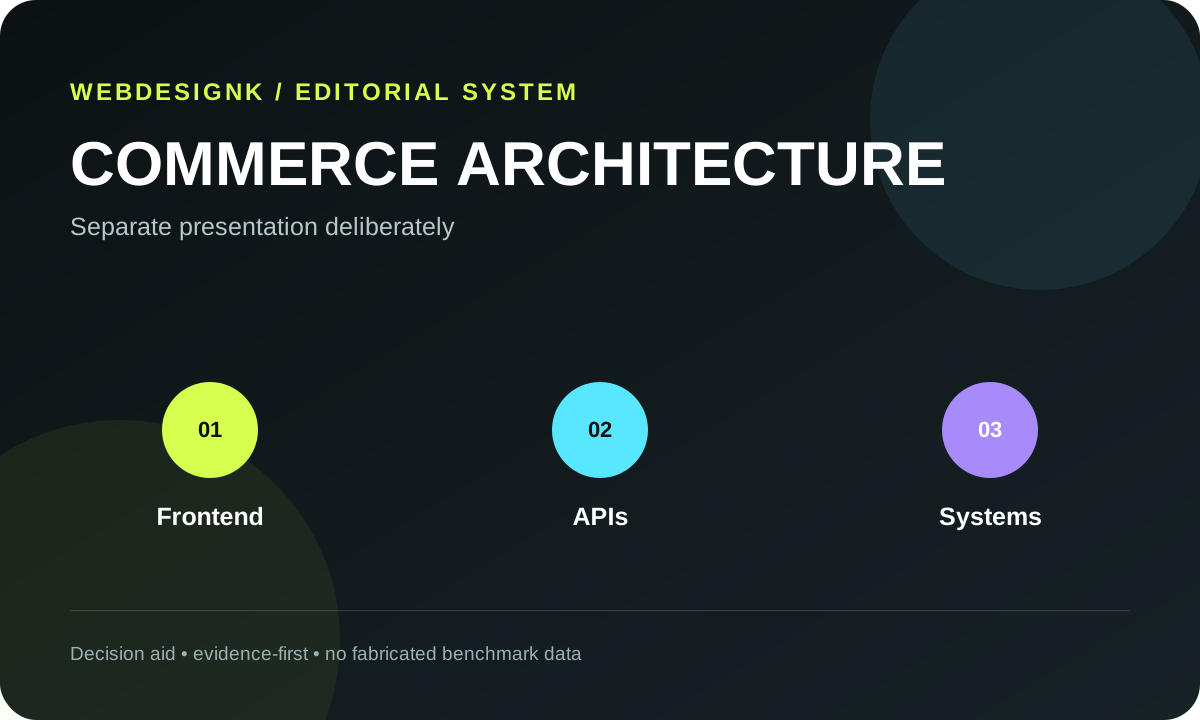
A headless storefront separates presentation from the commerce backend and communicates through APIs. Shopify’s Storefront API, for example, exposes products, collections, search and cart capabilities to custom storefronts, while Hydrogen is Shopify’s opinionated headless stack. This flexibility also means the team owns more decisions around data fetching, caching, preview, error handling, observability and deployment.

Map the systems that are authoritative for catalog, inventory, pricing, promotions, content, customer identity, search, analytics and orders. Do not let the frontend become an accidental source of truth.
Failure modes to plan for
API timeouts, stale cache, partial data, rate or complexity limits, search/index drift and checkout/session transitions can fail independently. Define graceful degradation and monitoring for the customer journeys that matter commercially.
Catalog, merchandising and discovery
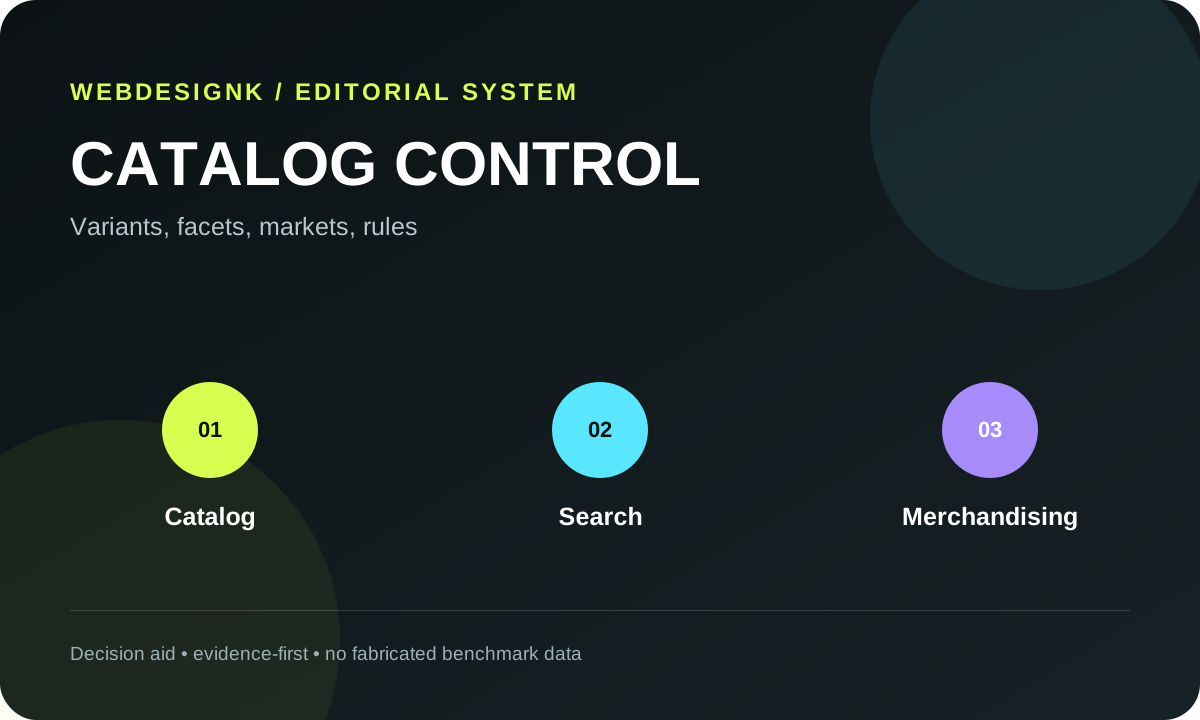
Headless complexity often begins in the catalog. Count variants, markets, price lists, languages, metafields/custom attributes, bundles and facets. Understand how merchandisers create collections, promotions and ranking rules. A beautiful custom grid is not useful if merchandisers lose the operational controls they rely on daily.
Search and filtering need URL rules. Decide which facets generate crawlable landing pages, which are UI state only, how canonicalization works and how internal links expose intentional category pages.
Product and category experience
Use custom frontend freedom where it creates useful differentiation: guided selling, complex comparison, bundles, configuration, rich media, editorial proof or segment-specific product education. Keep core commerce states—availability, selected variant, price, cart feedback—predictable and accessible.
Avoid turning every PDP into a JavaScript experiment. Render critical product information and links robustly, account for disabled scripts and loading states where relevant, and make variant/URL behavior explicit so analytics and search do not see uncontrolled duplicate states.
Checkout, payments and conversion friction
Treat checkout boundaries as architecture, not a final button. Preserve cart state, discounts, locale, customer identity, attribution and analytics across transitions. When the commerce platform owns checkout, understand what can and cannot be customized and test the handoff on real devices.
The funnel calculator above uses only your own sessions, cart, checkout and purchase values. It can model one stage improvement without pretending that any percentage lift is expected from headless architecture.
SEO and indexation
Headless SEO is an implementation responsibility. Define canonical URLs, status codes, redirects, sitemaps, robots rules, pagination/facet policies, structured data and internal linking in the storefront application. Ensure server-rendered or otherwise indexable output contains the content and links search engines should discover.
For migrations, keep a complete URL mapping. A platform change does not require gratuitous URL changes. Where URLs change, use direct permanent redirects and update internal links to the new targets.
Performance and Core Web Vitals
Headless can give a team more control over rendering and delivery, but control is not the same as performance. Large client bundles, third-party scripts, unoptimized media, inefficient API waterfalls and personalization can make a custom storefront slow. Set budgets for key templates and observe LCP, INP and CLS as the application evolves.
Cache stable, non-personalized data where safe; keep personalized data boundaries explicit. Design API queries around the data the route needs rather than mirroring entire backend objects.
Analytics, experimentation and retention
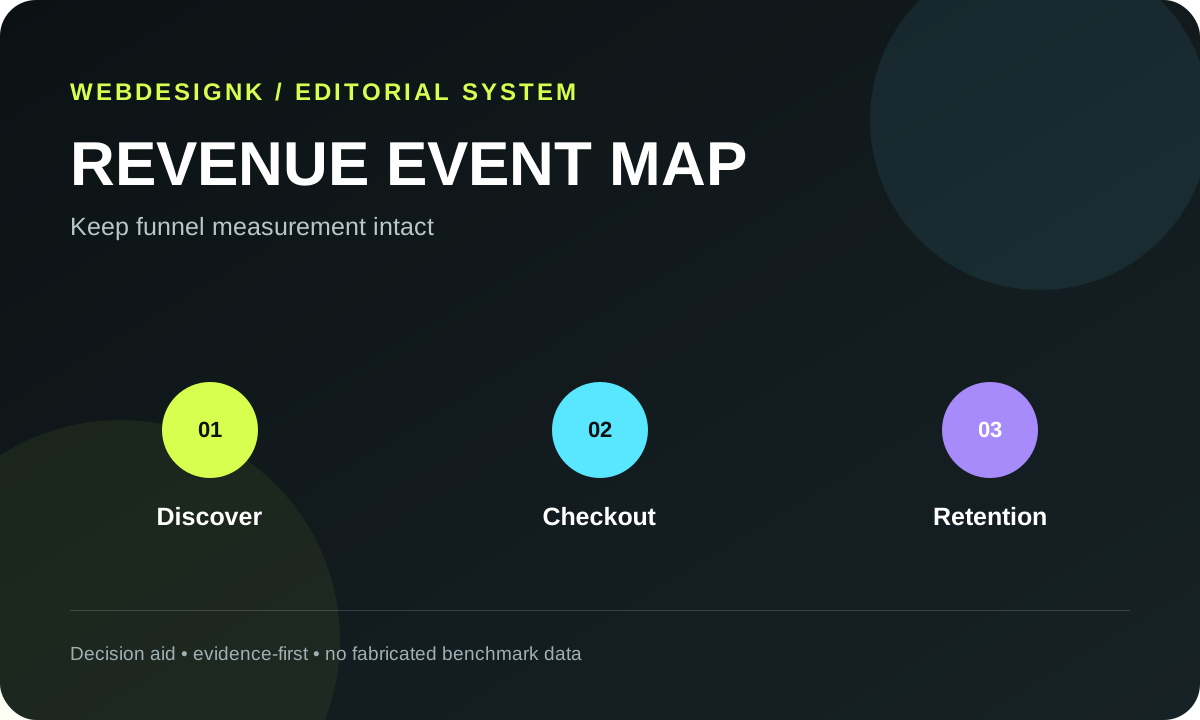
Create an event contract before implementing experiments: product view, search, filter use, variant selection, add to cart, checkout start, purchase and meaningful post-purchase actions. Maintain stable product and order identifiers across services so analysis remains possible.

Experiment on hypotheses, not architecture ideology. A one-stage funnel model is useful for prioritization because it shows the arithmetic impact of a change using your own data; it is not evidence that a specific UI change will produce that change.
Edge case: multiple markets and price lists
International commerce can make a headless boundary valuable, but it also multiplies state. Define the authority for currency, taxes, market availability, translated content, price lists and customer eligibility. A cached product response must not leak the wrong market or price. Test URLs and metadata across market variants so the custom frontend does not create duplicate or contradictory indexable pages.
Edge case: authenticated B2B commerce
B2B storefronts may need company accounts, negotiated catalogs, role-based purchasing and approval flows. Keep public SEO content separate from permissioned account data. Document what can be cached publicly, what must be fetched per customer and what actions require server-side authorization. Headless flexibility helps express the workflow, but also makes these boundaries your responsibility.
Preserve attribution across storefront and checkout
When checkout lives on another hostname or platform-controlled surface, test source/medium, campaign attribution, cart identifiers and analytics sessions across the handoff. Prevent duplicate purchase events and ensure order IDs are stable enough for reconciliation. The commercial dashboard should be able to connect a storefront experiment to completed orders without relying on fragile client-side assumptions.
Failure-state UX matters more than happy-path polish
Test expired carts, unavailable variants, promotion changes, payment failure, slow checkout redirects and returning sessions. A headless storefront should explain what changed and preserve as much valid state as possible. These states are where custom software quality becomes visible to customers.
Build the day-two runbook before launch
Name who responds when product data is stale, a commerce API is slow, search results disappear, a marketing pixel blocks rendering or checkout attribution breaks. Include logs, dashboards, rollback steps, feature flags and vendor escalation contacts. Peak-season risk should be modeled from dependencies, not just frontend load.
Also define the merchandiser workflow: preview unpublished content, schedule campaigns, validate product availability and roll back a broken component without waiting for a full engineering project. If headless removes useful platform workflows, the replacement needs to be part of scope.
Separate platform capability from custom responsibility
A platform may provide cart, checkout, catalog and customer primitives while the custom storefront owns how users discover and interact with them. Draw this boundary explicitly. Every responsibility moved out of a managed theme must land somewhere: frontend code, middleware, edge function, third-party service or operations process. “Headless” is not a place where complexity disappears.
Migration edge case: redesign plus platform change
Changing platform and redesigning the shopper journey at the same time increases diagnostic ambiguity. If revenue or search performance changes after launch, the team must distinguish content/URL effects from frontend, catalog, analytics and checkout changes. Build parity tests and migration evidence before layering experiments on top. Preserve known-good identifiers and URLs when possible so the launch has fewer moving parts.
Operational impact for the team
Headless introduces a software product operating model. Someone owns frontend dependencies, commerce API versions, preview environments, monitoring, incidents and deployment. Content and merchandising teams need preview and publishing workflows. Marketing needs to know which changes require code and which remain admin-controlled.
The question is not only “can our developers build it?” Ask whether the organization can operate it through promotions, peak periods, platform upgrades, analytics changes and team turnover.
Prioritized implementation roadmap
Begin with the revenue path and one high-value differentiator. Establish API clients, rendering/caching rules, analytics contract, SEO primitives and checkout handoff before expanding into personalization. Build migration tooling and parity checks for catalog/content. Run production-like load and failure tests. Launch with monitoring that separates storefront errors, commerce API errors, search errors and checkout failures.
For many teams, a phased approach is safer: keep standard platform capabilities where they work, replace only the storefront surfaces that need differentiation, and maintain an exit path if the custom layer becomes too expensive to own.
Frequently asked questions
Is headless ecommerce automatically faster?
No. Headless gives the team more delivery control, but frontend bundles, third parties, API waterfalls, caching and media still determine performance.
Does headless hurt SEO?
It can be SEO-safe when the storefront intentionally implements crawlable content, links, status codes, canonicals, sitemaps, redirects and structured data.
When should a team avoid headless?
Avoid it when the shopper problem is already well served by the standard platform and the organization does not want to own a custom frontend operating model.
Can headless be introduced gradually?
Often yes. A team can retain platform capabilities and replace only storefront surfaces where custom experience has a clear business case.