Quick answer
Landing-page cost follows scope depth, not the fact that there is one URL. Define the variants, CMS/editor model, content responsibility, integrations, ecommerce, localization, migration, motion, accessibility evidence, performance targets, analytics and post-launch ownership first. Then apply current U.S. market rates to the same scope across vendors.
Last reviewed: 2026-10-07T00:00:00.000ZLanding-page scope & cost-driver estimator
Model the delivery pressure behind a landing page or landing-page system. The result is a relative scope tier and workstream breakdown—not a vendor quote, conversion promise or market benchmark.
1. Illustrative Lean / Growth / Complex workstream shares
Takeaway: as integrations, localization and governance increase, engineering, QA and integration effort occupy more of the delivery mix.
2. Your current workstream breakdown
Takeaway: the bars show where your selected requirements redistribute delivery attention before a vendor prices the scope.
3. Scope-pressure profile
Takeaway: high peaks are the requirements to clarify first in an agency brief because they are most likely to create different interpretations of “one landing page.”
Cost-driver map from your scope
| Driver | Pressure | Why it changes delivery |
|---|---|---|
| Template / variant system | 10/100 | More distinct layouts and campaign variants increase design states, component logic and QA combinations. |
| CMS / publishing | 50/100 | Structured editing, preview, reusable blocks and governance add content-model and workflow work. |
| Localization | 0/100 | Markets add copy, layout expansion, locale routing, analytics and QA combinations. |
| Integrations | 17/100 | CRM, forms, scheduling, analytics and other systems add contracts, error states and test paths. |
| Commerce flow | 8/100 | Cart, checkout, product/offer state and payment-related transitions require deeper end-to-end QA. |
| Migration | 8/100 | Legacy URLs, content, assets, analytics and redirect/state mapping create launch dependencies. |
| Motion | 68/100 | Animation adds responsive states, performance constraints and reduced-motion behavior. |
| Accessibility QA | 82/100 | Formal evidence requires broader keyboard, focus, labels, reflow and assistive-tech validation. |
| Content production | 52/100 | Copy, proof, imagery and offer assets create research, approval and production dependencies. |
Assumption note: scope thresholds, pressure scores and workstream shares are WebDesignK editorial planning coefficients. Apply current market rates only after the deliverables, dependencies, acceptance criteria and ownership model are defined.
Tables built for the buying decision
Primary decision table
| Scope tier | Deliverables | Team | Timeline framework | Major cost drivers | Best fit |
|---|---|---|---|---|---|
| Lean | One focused page; small reusable section set; standard form/CTA; basic analytics; one market; responsive QA | Strategist/designer + frontend/full-stack engineer; content owner; QA part-time | Short campaign build when offer, copy and integration inputs are ready | Copy readiness; design-system reuse; form behavior; analytics | Single offer or campaign with limited integration and no complex publishing workflow |
| Growth | Reusable campaign template; CMS blocks; CRM/marketing automation; richer proof; migration; motion; experiment-ready measurement | Strategy/CRO; UX/UI; engineer; content/creative; QA/analytics | Phased design/build with integration testing and launch acceptance | Variant system; CMS; integrations; content production; accessibility; migration | B2B/SaaS demand generation or recurring campaign production |
| Complex / enterprise | Multi-market/brand governance; personalization; ecommerce/checkout; many integrations; formal accessibility/performance evidence; experimentation operations | Cross-functional design, engineering, content, data/analytics, QA, accessibility and operations owners | Program delivery with dependency mapping, governance and staged rollout | Localization; commerce; data/integrations; governance; QA combinations; security/privacy dependencies | High-volume acquisition systems where landing pages are part of the production application stack |
12-month recurring cost and ownership map
| Item | Why it exists | Cadence | Control lever |
|---|---|---|---|
| Hosting / CDN | Serve campaign traffic reliably and quickly | Monthly / usage | Architecture, media strategy, caching and traffic profile |
| CMS / publishing | Let marketers create or update controlled campaign pages | Monthly / annual | Choose only the editing/governance features actually required |
| Forms / scheduling | Capture and route leads or meetings | Monthly / usage | Consolidate overlapping tools and monitor failure rate |
| Analytics / consent | Measure journeys and manage tracking requirements | Ongoing | Maintain a documented event map and tag inventory |
| CRM / automation | Route, enrich and follow up on leads | Monthly / usage | Reduce duplicate integrations and unnecessary enrichment |
| Experimentation / personalization | Run controlled variants where traffic justifies them | Monthly / quarterly | Keep a hypothesis backlog; retire unused variants |
| Content / creative | Refresh offers, proof, copy and campaign assets | Campaign / ongoing | Reuse structured proof/assets and maintain ownership |
| Performance / accessibility QA | Catch regressions as pages and scripts change | Release / recurring | Automate checks plus representative manual review |
| Maintenance / integrations | Keep dependencies, APIs and routing working | Monthly / quarterly | Assign owners, monitoring and change-control |
Turn this planning result into a scoped review.
Send the assumptions, constraints and result summary. WebDesignK can review the architecture/content/implementation boundary, identify missing discovery inputs and return a prioritized next-step scope.
- Bring: current site/product, constraints, integrations and your tool result.
- You get: a scoped recommendation, open questions and implementation priorities.
A landing page can be inexpensive when it is one focused, reusable campaign page with launch-ready copy, a standard form and limited integrations. Cost rises when the page becomes a system: multiple variants, CMS publishing, localization, ecommerce, CRM/analytics integrations, migration, motion, formal accessibility QA and ongoing experimentation. For U.S. buyers, compare proposals on the same scope and acceptance criteria before comparing price.
What you'll learn / decide
- how to distinguish a lean landing page from a reusable landing-page system
- which scope choices create design, engineering, content, QA and integration work
- how to separate one-time delivery from recurring optimization and platform costs
- what performance, accessibility and measurement criteria should be explicit
- how to compare agency proposals without treating page count as the main cost driver
- how to use the estimator as a buying brief rather than a fabricated price calculator
Last reviewed: October 7, 2026. Market pricing, ad-platform guidance and performance standards change. Re-check current sources before signing a new statement of work.
Decision snapshot for Landing Page Design Cost
Landing-page design cost is driven less by the fact that there is “one page” and more by how many states, variants, systems and responsibilities that page contains. A campaign page with one message, one form and one analytics path is fundamentally different from a multi-market acquisition surface with personalization, product data, checkout behavior, CRM routing, motion, accessibility evidence and an experiment pipeline.
The single most important tradeoff is launch speed versus reusable system depth. A narrow page can ship quickly and still be production-ready. A reusable system costs more upfront because the team is designing components, publishing rules, measurement, QA and governance that can support future campaigns without rebuilding from scratch.
Use the interactive estimator above to expose where your scope sits. It produces a relative tier and workstream breakdown, not a dollar quote or expected conversion lift.
Direct answer and planning range framework
There is no reliable neutral sticker price for a landing page because the market often bundles design, development, content, analytics, integrations and optimization differently.
For current U.S. context, Clutch's web design pricing guide, updated September 21, 2026, reports that U.S. web design companies on its marketplace commonly list $100–$149 per hour and that overall web design engagements can span roughly $2,000–$100,000, depending on project size, complexity and features. Those figures describe broad web-design work, not a landing-page-specific price list. Use them as context for labor-market comparison, not as a quote for this page.
Build the range from deliverables
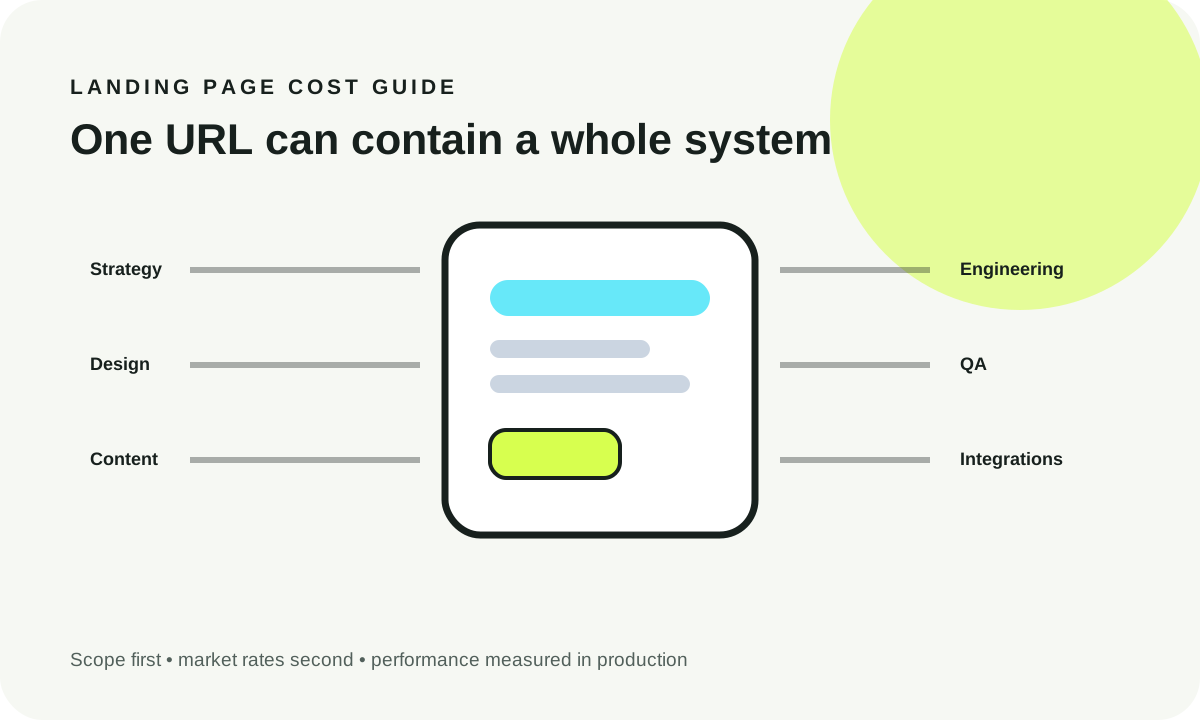
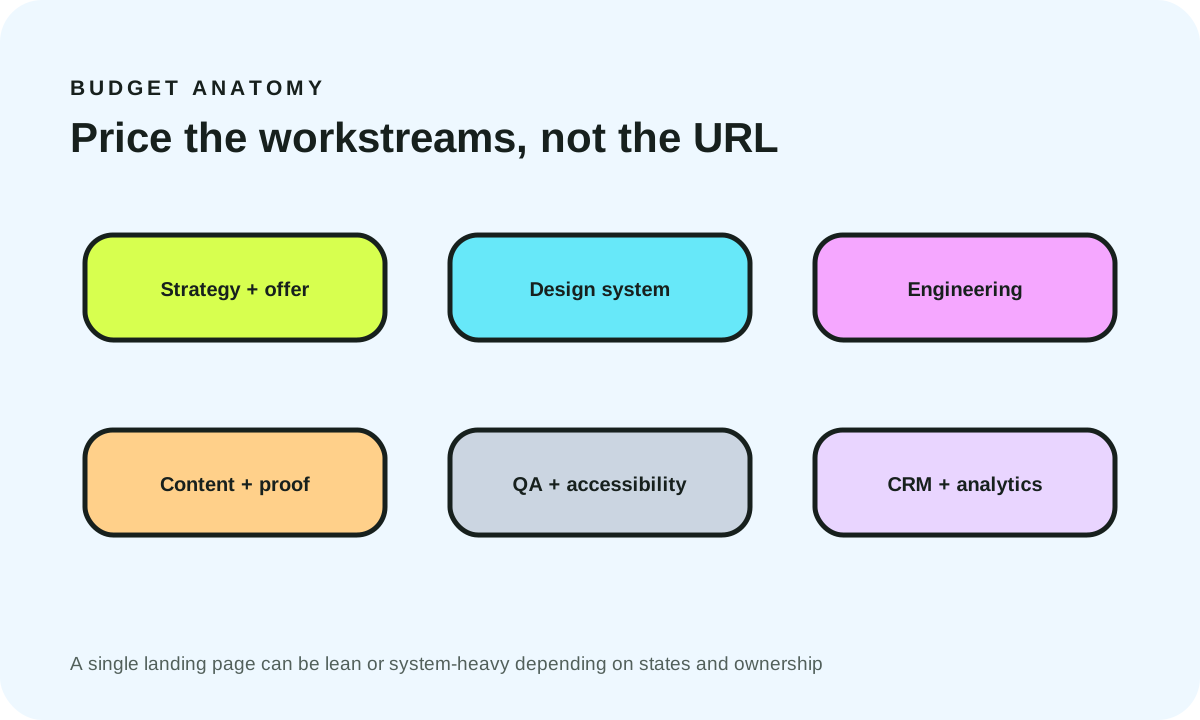
A useful landing-page budget separates:
Strategy: audience, offer, message hierarchy, traffic source, objections, proof and conversion event.
Design: wireframe, visual direction, responsive states, reusable sections, form states, trust elements and motion.
Engineering: component implementation, CMS, forms, validation, analytics, performance, personalization and integration logic.
Content: copy, proof, images, product/offer data, legal inputs and localization.
QA: browser/device checks, accessibility, analytics events, form routing, performance and launch acceptance.
Operations: post-launch content changes, experiments, monitoring and recurring third-party costs.
The estimator turns your scope choices into this workstream view so vendors can price the same thing.
Performance belongs in the scope, not in marketing adjectives
Google Ads currently says landing-page experience considers the usefulness and relevance of information, ease of navigation and whether the page meets expectations created by the ad. Its optimization guidance also emphasizes matching the page to the ad/keyword, mobile friendliness, easy navigation, a clear action and useful original content.
That does not mean one design pattern guarantees better conversion. It means the brief should specify the user job and traffic promise clearly enough to test whether the page fulfills them.
For technical performance, web.dev's current Core Web Vitals guidance identifies LCP, INP and CLS as stable metrics and defines “good” thresholds of LCP within 2.5 seconds, INP at 200 ms or less, and CLS at 0.1 or less. Treat those as engineering quality targets to measure on representative production pages, not as a promise of revenue.
Scope tiers: lean, growth and complex/enterprise
Scope tiers are planning shorthand. They should explain what is actually inside the project.
Lean landing page
A lean page usually has:
- one traffic/offer combination
- one primary CTA
- a small number of reusable sections
- client-supplied or nearly final copy
- one standard form or scheduling action
- basic analytics events
- one language/market
- limited or no migration
- responsive implementation
- baseline accessibility and performance QA
Lean is not the same as “design-only.” The page still needs form states, validation, mobile behavior, analytics verification and production launch checks.
Growth landing-page system
A Growth scope may add:
- several campaign variants
- reusable CMS blocks
- CRM or marketing-automation routing
- richer proof and content production
- experimentation-ready sections
- multiple forms or lead paths
- localization
- migration from existing campaign pages
- advanced motion
- formal accessibility checks
- field-level attribution and downstream analytics
The work shifts from “make this page” toward “build a controlled acquisition surface that marketing can operate.”
Complex / enterprise landing experience
Complex scope may include:
- several markets and brands
- governed CMS publishing
- personalization
- product/pricing data
- ecommerce or checkout behavior
- authenticated or account-aware flows
- several integrations
- consent/privacy dependencies
- design-system governance
- formal accessibility evidence
- strict performance budgets
- high-volume experimentation
- security/procurement review
At this tier, the landing page is part of the customer-acquisition application stack.
What drives cost more than page count alone
A landing page is a good example of why raw URL count is a weak budget proxy.
Variant logic
Five pages made from one reusable template can be simpler than one highly bespoke page with many conditional states. Define whether “variants” are copy swaps, layout variants, audience variants, product variants or fully independent designs.
Form and lead-routing behavior
A form may need:
- validation
- spam controls
- consent state
- attribution fields
- CRM mapping
- duplicate handling
- notifications
- failure recovery
- conditional routing
- scheduling
- file uploads
The visible form can be short while the implementation path is not.
CMS and publishing model
If marketers need to create new campaign pages without engineering help, the project needs reusable content blocks, validation, preview, permissions and documentation. That upfront system work can reduce later campaign cost, but it is still scope.
Content and proof
Conversion-focused pages often need more than polished interface copy. Someone must produce or validate:
- offer details
- product facts
- customer proof
- screenshots
- comparison claims
- implementation details
- legal/compliance language
- imagery/video
When content is not ready, design and development cycles can become approval cycles.
Team roles and delivery model
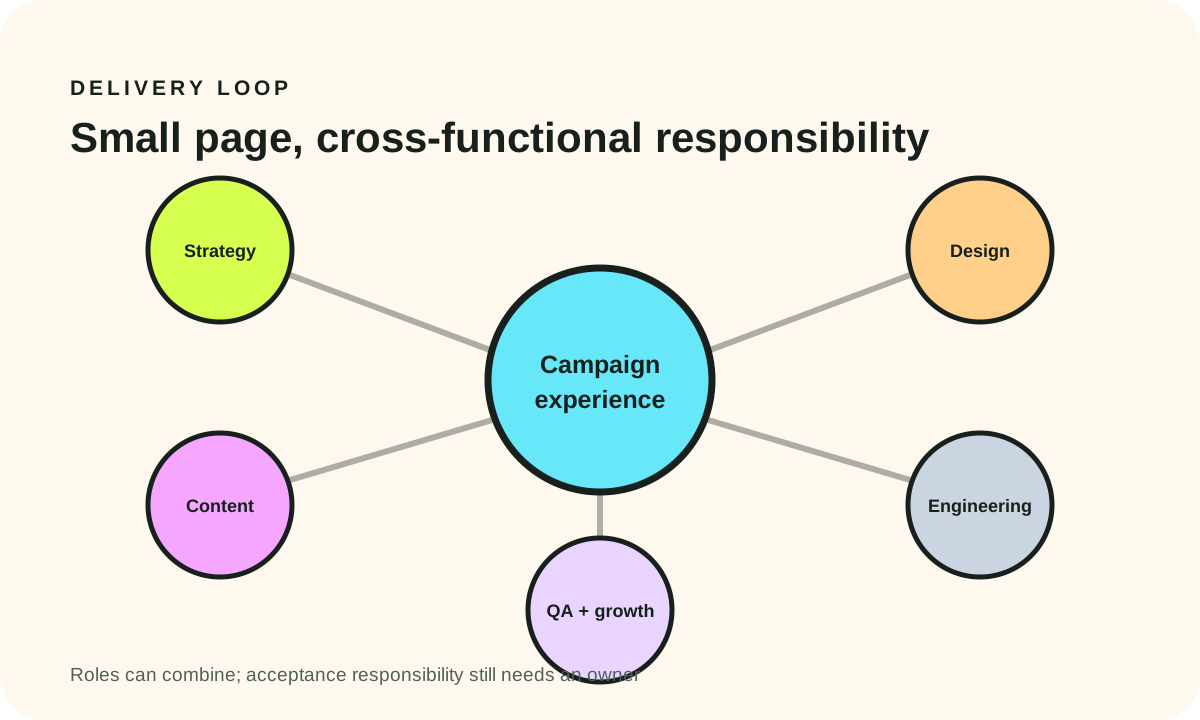
A good landing page is cross-functional even when the team is small.
Strategy and conversion planning
Defines audience, traffic source, offer, primary action, objections, proof requirements and measurement hypothesis.
UX and visual design
Turns that strategy into message hierarchy, section order, responsive behavior, states and visual emphasis.
Engineering
Builds components, CMS behavior, forms, analytics, integrations, performance and release mechanics.
Content / creative
Produces copy, proof, imagery, video and variant assets.
QA / accessibility
Checks keyboard behavior, focus, forms, labels, responsive reflow, browser/device combinations, analytics, integrations and performance.
W3C's current recommendation is WCAG 2.2. The standard covers perceivable, operable, understandable and robust web content and includes criteria for keyboard access, visible focus, reflow, target size and input assistance. A proposal that says “accessible” should still define which acceptance evidence will be delivered.
Agency, freelancer or in-house
Choose the delivery model based on responsibility and operating fit.
A freelancer can be highly efficient for a focused page with clear inputs. An agency can make sense when the page requires strategy, copy, design, engineering, analytics and integrations in parallel. An internal team can move fastest when it already owns the design system, CMS, CRM and experimentation stack.
The comparison should be total scope and ownership, not hourly rate alone.
Integrations, migration and data complexity
Landing pages often sit between paid media and business systems.
CRM and marketing automation
Document:
- endpoint/API ownership
- field mapping
- required/optional fields
- campaign/source attribution
- lead routing
- consent fields
- error handling
- retries
- notifications
- test environment
- production verification
A success message in the browser is not proof that the CRM received a correct lead.
Analytics and advertising tags
Decide which events matter before implementation.
Examples:
- form started
- form validation failure
- form submitted
- scheduling opened
- checkout started
- purchase completed
- CTA clicked
- qualified contact reached
Keep event names and parameters stable enough to compare variants.
Migration
Migration can include old campaign URLs, redirects, reusable content, analytics continuity, existing experiments and CRM attribution parameters. If old landing pages already receive organic links or paid traffic, treat migration as a production change rather than simply deleting them after the new design is approved.
Ecommerce
A landing page that connects to product selection, cart or checkout inherits more state: price, inventory, variants, shipping/payment behavior, order analytics and error paths. That should move the estimate into deeper engineering and QA even when the visible page still looks simple.
Timeline and how urgency changes staffing
Urgency changes the delivery plan, not the amount of risk.
A fast landing-page launch is realistic when:
- the offer is approved
- copy is ready
- brand assets exist
- CRM/form behavior is known
- analytics events are defined
- integrations have credentials/sandboxes
- stakeholders can review quickly
- the page uses an existing design/component system
What compresses badly
The schedule becomes fragile when strategy, content, integration discovery and design all happen at once.
Adding people can parallelize design, content and engineering, but it cannot eliminate delayed approvals, missing credentials or unresolved claims.
Separate launch-critical from optimization
Launch-critical scope protects:
- offer accuracy
- form/checkout completion
- accessibility
- measurement
- performance
- legal/privacy dependencies
- responsive behavior
- integration reliability
Post-launch optimization can include alternative section orders, proof density, copy variants, new motion, personalization or expanded content. This keeps urgency from turning basic quality controls into “phase two.”
One-time vs recurring operating costs
The build invoice is only part of the 12-month view.
One-time delivery
Typical one-time work includes:
- discovery and offer framing
- wireframes/design
- component implementation
- CMS/configuration
- copy/creative production
- integration setup
- analytics instrumentation
- accessibility/performance QA
- migration
- launch
Recurring platform costs
Possible recurring items include:
- hosting/CDN
- CMS
- form/scheduling software
- experimentation/personalization tools
- analytics/consent tooling
- media/video hosting
- ecommerce/platform subscriptions
- third-party integration tools
Do not treat software subscription cost as the same thing as operating ownership.
Recurring optimization
If the landing page is a meaningful acquisition channel, plan for:
- experiment backlog
- campaign variants
- content/proof refresh
- analytics QA
- performance regression checks
- accessibility maintenance
- integration changes
- monitoring
- incident response
A reusable system is valuable only if someone owns it after launch.
Hidden costs and scope-change traps
The phrase “one landing page” hides several common change requests.
“Can marketing edit everything?”
That can require structured CMS fields, reusable sections, preview, guardrails and training.
“Can we add a calculator?”
A calculator introduces logic, validation, state, responsive design, analytics and QA.
“Can this be three languages?”
Localization changes copy length, layout, routing, QA and content ownership.
“Can we make the hero more cinematic?”
Motion can introduce video production, preload decisions, reduced-motion behavior, layout/performance constraints and more device testing.
“Can the form route leads differently?”
Conditional lead routing changes back-end behavior and acceptance tests.
“Can we reuse it for every campaign?”
That changes a page into a system. Define which sections are reusable, which are optional, which can reorder, what editors can configure and what must stay locked.
How to compare proposals on equivalent scope
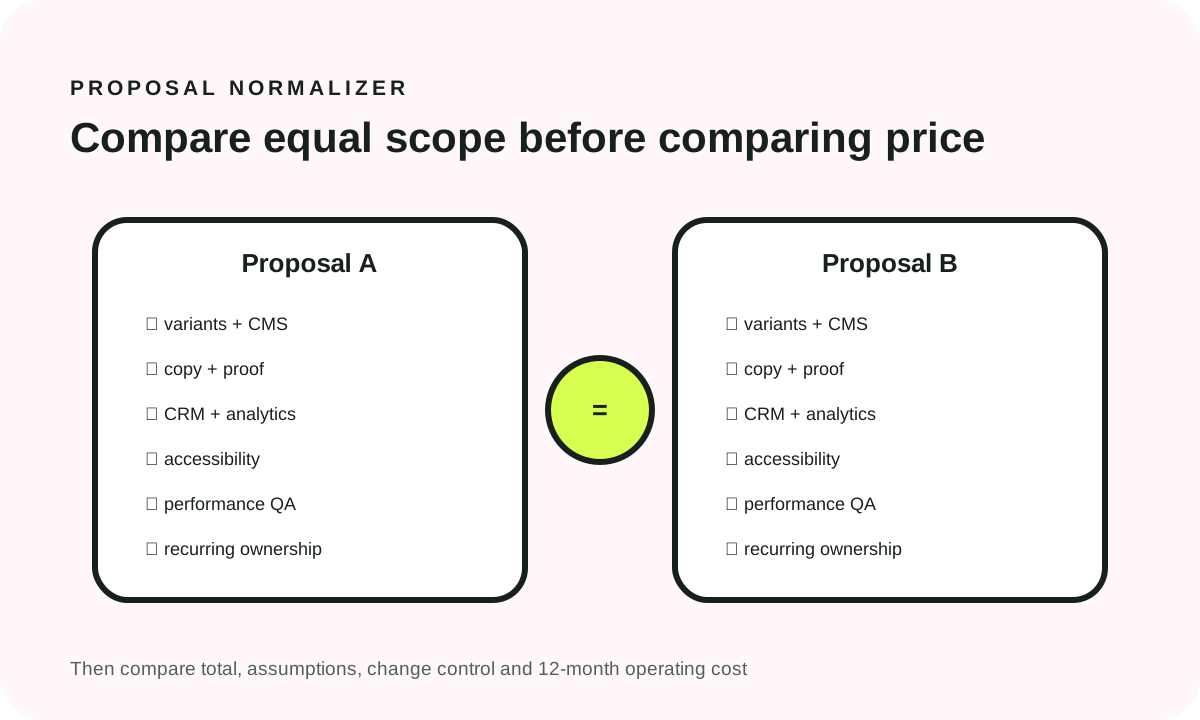
Normalize proposals before comparing price.
Ask each vendor to state:
- strategy/discovery deliverables
- number of templates and variants
- CMS/editing model
- responsive/device coverage
- copy and creative responsibility
- integrations
- analytics events
- migration
- localization
- ecommerce behavior
- accessibility acceptance
- performance acceptance
- QA/browser coverage
- environments and deployment
- documentation/training
- post-launch support
- exclusions
- change-control process
Require acceptance evidence
“Analytics included” should mean a documented event map plus verified receipt.
“Accessibility included” should mean defined criteria and evidence.
“Performance optimized” should mean representative measurement and a known target, not a screenshot of one lab run.
“CRM integration included” should mean field mapping, failure-path testing and production verification.
This makes the proposals comparable.
Budget FAQ and next-step brief
What should I budget first: design or content?
Budget them together when message, proof and offer structure are not already settled. A beautiful layout with unstable content usually creates rework. If copy and proof are truly launch-ready, the design team can work with much firmer constraints.
Does a faster landing page convert better?
Speed is part of user experience, but there is no universal conversion uplift you should assume. Use Core Web Vitals and representative production measurement as quality guardrails, then evaluate business outcomes with your own traffic and experiment design.
Is a custom landing page always better than a builder template?
No. A template or builder can be the lower-risk choice for a narrow campaign if it supports the required brand, measurement, accessibility, performance and integration behavior. Custom work is justified when the operating or experience requirements exceed the standard system.
How many variants should we build?
Build only variants tied to a real audience, offer, traffic source or test hypothesis. Do not multiply pages because the CMS can. Each meaningful variant creates content, QA and measurement responsibility.
What performance targets should go into the brief?
For web quality, current Core Web Vitals guidance uses LCP, INP and CLS with the “good” thresholds described above. Also define image/video budgets, third-party script rules and representative device/network testing appropriate to your audience.
What should I bring to a vendor call?
Bring:
- offer and target audience
- primary traffic sources
- desired conversion event
- existing design system
- copy/proof readiness
- template/variant count
- CMS requirements
- languages/markets
- CRM/form/analytics integrations
- ecommerce requirements
- migration inventory
- motion expectations
- accessibility target
- target launch window
- post-launch experiment ownership
Use the estimator summary as the first page of that brief.
Performance and conversion are operating disciplines
A landing page does not stop changing when it ships.
The launch establishes a baseline. After that, separate defects from experiments.
A broken form, missing analytics event, inaccessible focus state or layout shift is a defect. Fix it.
A new headline, CTA hierarchy, proof order or shorter form is an experiment. Measure it with a defined hypothesis and guardrails.
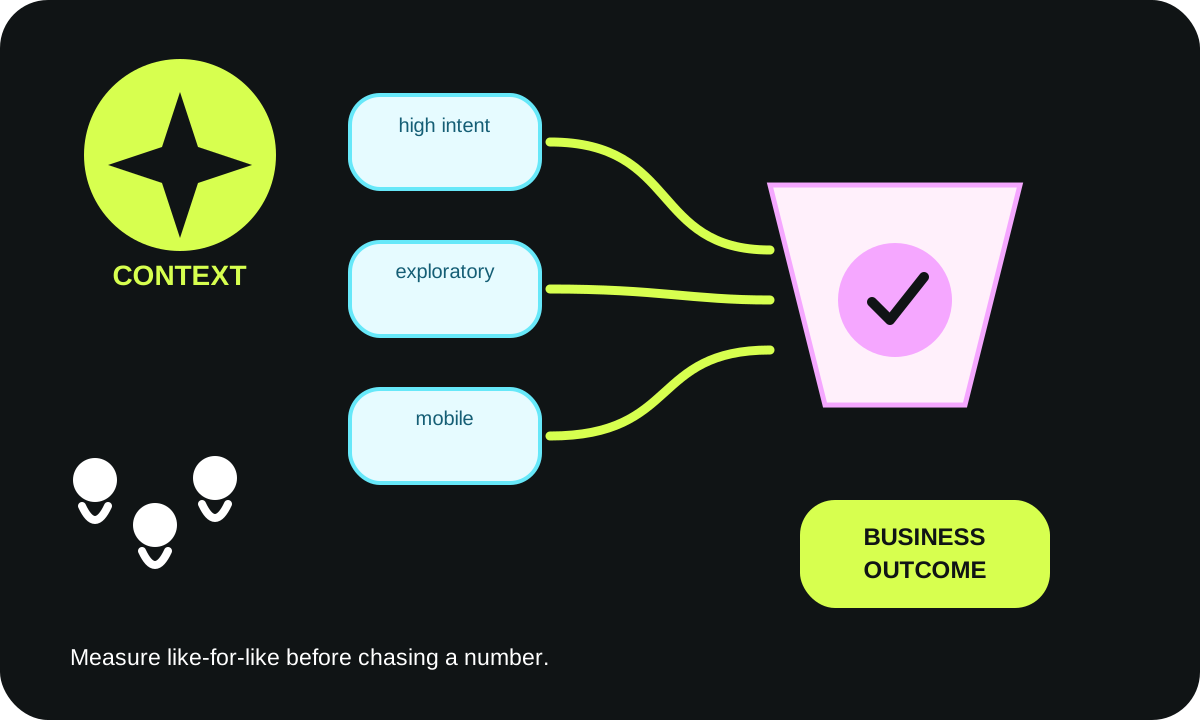
Avoid declaring a redesign successful because one metric moved immediately. Traffic mix, campaign changes, seasonality and offer changes can all affect outcomes. Keep a change log so the team can interpret what happened.
Use traffic-message alignment as a review gate
Before launch, compare:
Ad / email / social promise → landing-page headline → supporting proof → CTA → form/checkout outcome.
If the page changes the promise halfway through, no amount of visual polish solves the mismatch.
Google Ads explicitly recommends matching the landing page to the ad/keywords and mirroring the call to action. Use that as a practical review question even when traffic comes from other channels: does the destination fulfill the expectation that created the click?
Measure mobile as a primary path
Do not treat mobile as a resized desktop screenshot.
Check:
- headline wrapping
- CTA visibility
- tap targets
- form keyboard behavior
- error messages
- sticky elements
- video/motion
- proof readability
- load behavior
- checkout/handoff paths
The best page is the one that completes the user's job reliably in the conditions they actually use.
Use the estimator as a procurement artifact
Change the estimator inputs until they reflect the intended launch.
If the result changes from Lean to Growth because the team added CMS governance, more integrations and formal accessibility evidence, that is useful. The tool is showing why two vendors might quote different totals.
Copy the result and ask each vendor:
- Which selected requirements are included?
- Which are assumptions?
- Which require discovery?
- Which are excluded?
- What evidence proves completion?
- What continues after launch?
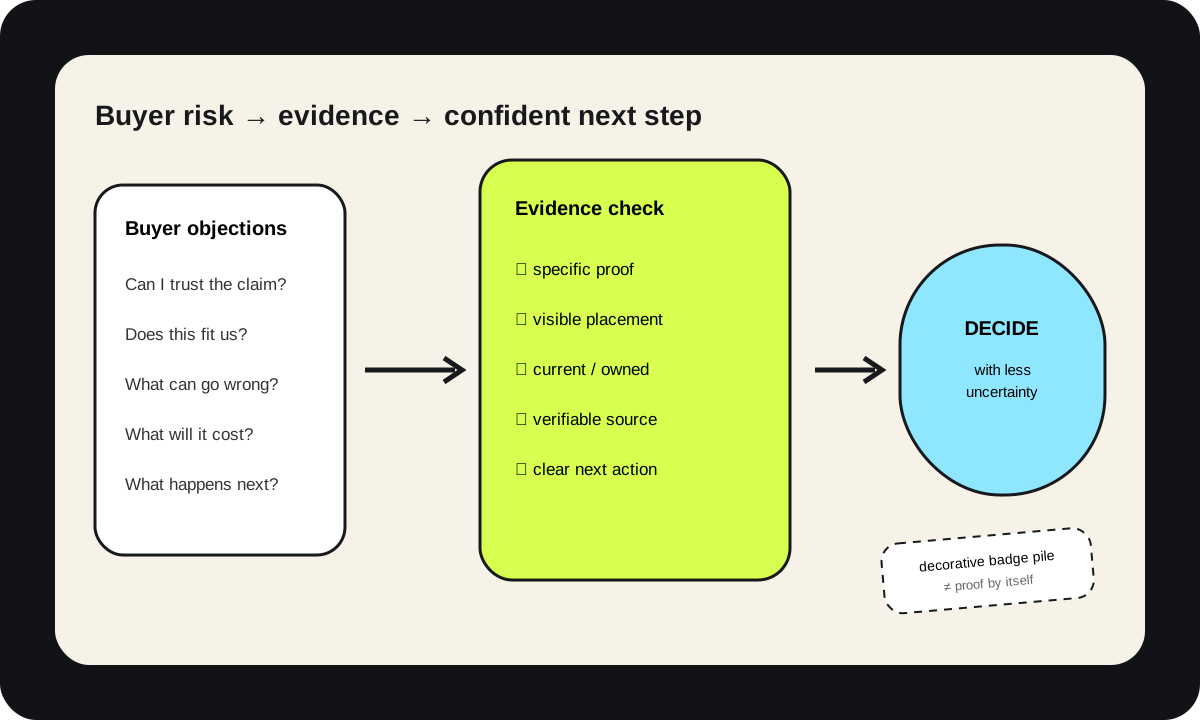
WebDesignK can help turn that brief into a scoped implementation plan through web design and development. You can also continue with website conversion optimization, conversion-rate benchmarks and context, and trust signals that reduce buyer risk.
Sources and pricing boundary
This guide uses Clutch for current U.S. web-design market context, Google Ads for current landing-page experience guidance, web.dev for Core Web Vitals definitions/thresholds and W3C for WCAG 2.2.
The Clutch figures cited here are broad web-design marketplace context in U.S. dollars, reviewed October 7, 2026. They are not landing-page-specific quotes, WebDesignK pricing or a guaranteed budget range.
The interactive tier, workstream shares and pressure indices are editorial planning assumptions. They do not predict price, conversion rate, Quality Score, revenue or delivery time.
Frequently asked questions
How much should a landing page cost?
There is no defensible universal price without scope. Current U.S. web-design marketplace rates provide labor context, but a landing page should be estimated from variants, content, CMS, integrations, analytics, migration, accessibility, performance and operating ownership.
What makes a landing page expensive?
Reusable variant systems, custom content/creative, CRM or ecommerce integration, localization, migration, advanced motion, formal accessibility evidence, personalization and deeper measurement create more delivery work than one static page.
Does faster page speed guarantee more conversions?
No. Performance is a user-experience quality input, not a guaranteed conversion lift. Use current Core Web Vitals as technical guardrails and evaluate business outcomes with your own traffic and experiments.
Should landing pages be in a CMS?
Use a CMS when marketers need safe repeatable publishing and variation. A one-off campaign with engineering ownership may not need it; a recurring acquisition program often benefits from structured reusable blocks.
What should an agency proposal include?
Ask for strategy scope, template/variant count, content responsibility, CMS model, forms/integrations, analytics, migration, localization, accessibility, performance criteria, QA, deployment, documentation, recurring ownership, exclusions and change control.
Which landing-page KPIs matter?
Track the intended business action plus leading quality signals: form/checkout completion, qualified downstream outcomes, error rates, latency/performance, accessibility defects, analytics integrity and experiment-specific guardrails.
Sources and assumption boundaries
Fast-changing platform, pricing and search claims were reviewed on 2026-10-07T00:00:00.000Z. Interactive scores and scenarios are clearly labeled planning models, not sourced market benchmarks.
- Clutch — Web Design Company Pricing Guide 2026 Updated September 21, 2026; current U.S. web-design marketplace context including listed hourly-rate ranges and broad engagement ranges. Reviewed October 7, 2026; not landing-page-specific pricing.
- Google Ads Help — Landing page Official current definition and landing-page-experience factors such as usefulness/relevance, navigation and expectation alignment. Reviewed October 7, 2026.
- Google Ads Help — Optimize your ads and landing pages Official current guidance on message match, mobile friendliness, navigation, clear actions and useful original content. Reviewed October 7, 2026.
- web.dev — Web Vitals Official current Core Web Vitals definitions and good-experience thresholds for LCP, INP and CLS. Reviewed October 7, 2026.
- W3C — Web Content Accessibility Guidelines (WCAG) 2.2 Current W3C Recommendation used for accessibility acceptance context. Reviewed October 7, 2026.